"We are graduating. In the next few years, I see LORIOT transitioning from a successful scale-up into a global institution."
Ten years into LORIOT’s journey, few people have witnessed its evolution as closely as Yannik Kopp, our Chief Strategy Officer. Having seen the company through its early days, its phases of rapid growth, and now its transition toward becoming a global institution, he carries a unique blend of historical perspective and forward-looking vision.
In this new #LORIOTVoices interview, right at the heart of our 10th-anniversary celebration, we sit down with him to explore how strategy, culture, and ambition intertwine at this pivotal moment in our story.
1. How would you describe what a Chief Strategy Officer does in the IoT sector to someone unfamiliar with the role? What is your mission as CSO?
To describe my role, I look at LORIOT like a high-performance racing team. We have a vision to win. We want to enable planetary-scale IoT that creates true business value and solves challenges for humanity.
To achieve this goal, my role as CSO is dual-focused:
Externally, I read the track conditions. I do not look at just the technology, but at the industries driving it. I analyze where sectors like Smart Metering, Industry 4.0, and Smart Buildings are heading to ensure we position ourselves to capture that demand.
Internally, and this is critical, I am responsible for the 'telemetry' of the car. I am shaping our internal structure to ensure we are a well-oiled machine. I ensure that every department, from engineering to sales, is connected by clear data and processes so we do not just move fast, but move efficiently.
"My mission as a CSO is to ensure our technology doesn't just deliver data, but automates better business results. If the CEO is the Team Principal setting that vision, I am the Chief Race Strategist."
Currently, my specific mission is to keep us on the winning line. We are not in the pit lane anymore; the car is on the track, and we are already fast. After two years of heavy investment and team growth, we have built a powerful engine that is delivering results.
2. How has your perspective evolved from your early days at LORIOT in sales, through your time at Microsoft, to your current strategic role?
When I started in sales at LORIOT, it was not about closing deals. It was about survival in a young, wild market. It was a consulting role where we had to hand-hold every customer because the knowledge simply did not exist yet. This time gave me a deep understanding of customer pain.
I saw that customers were facing the immense operational complexity of maintaining a fleet of devices in the field, while simultaneously trying to integrate that data into their siloed business processes. They needed someone to help them solve that complexity.
Then, Microsoft fundamentally changed how I view leadership. The most profound lesson was debunking the myth that you have to choose between structure and agility. I realized they do not exclude each other.
I saw that well-defined processes and KPIs are not there to micromanage; they are there to remove the noise. When a solid system handles the basics, the team can focus its energy on innovation. I also learned the mindset of a true market leader:
"You must maintain the hunger of a challenger. Even when you are at the top, you must keep innovating."
Now, after years of working in LORIOT, my perspective is a hybrid. I combine the entrepreneurial agility of my early days to identify opportunities like LORIOT Verso, our new IoT solution development department. I ensure we stay hungry and innovative, but with the maturity of a market leader.
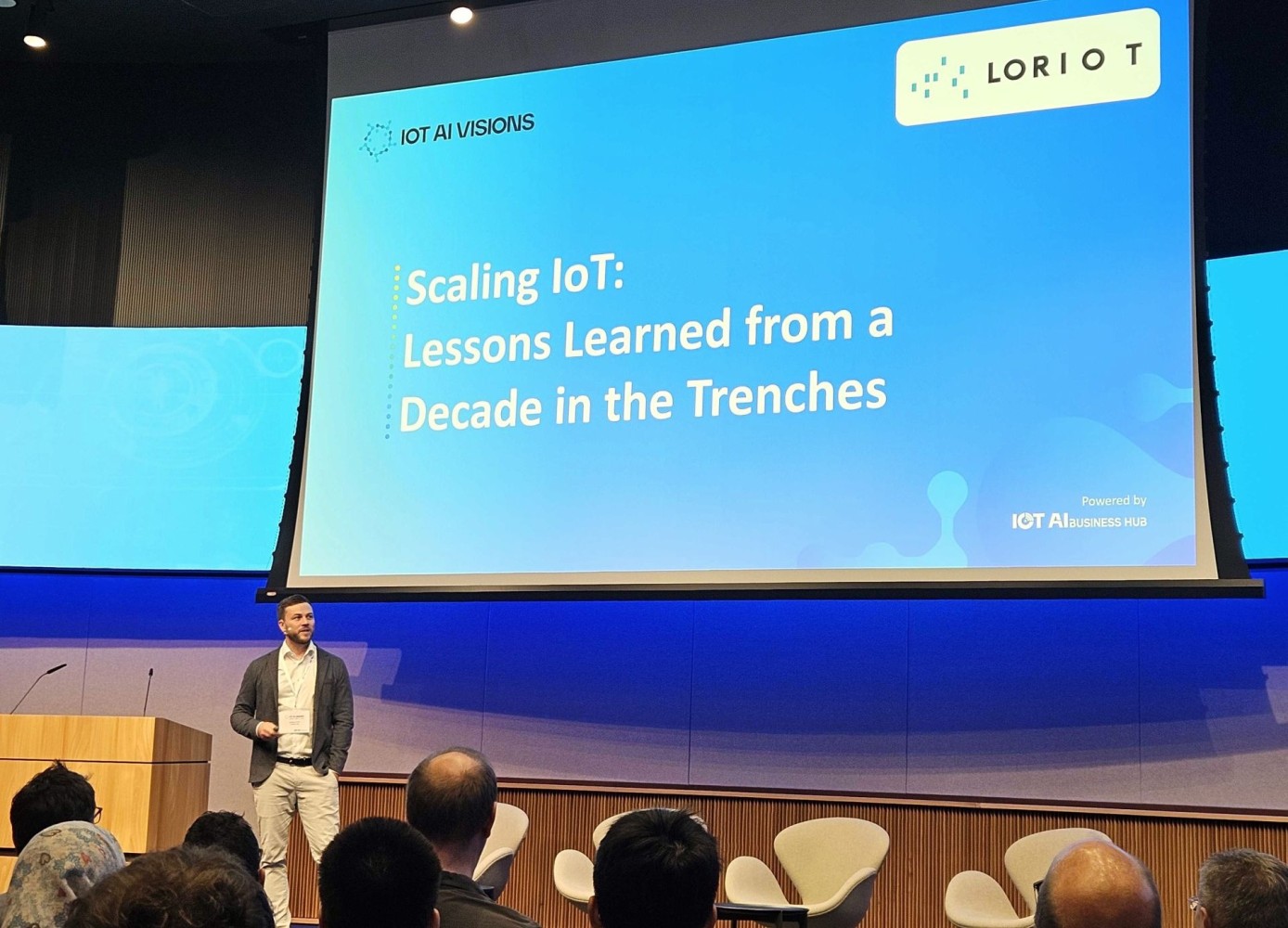
Yannik at IoT AI Visions 2025
3. What has your experience taught you about the gap between what customers think they need and what actually drives their success?
The biggest gap I see is the difference between a successful demo and a successful business.
The dangerous thing about IoT is that the starting point looks deceptively simple. It is easy to put a few devices in a room, connect them, and see a chart on a dashboard. Customers often see that and think they are ready to scale immediately. But that is the trap.
"What drives success is not the ability to gather data once; it is the ability to operate the entire ecosystem at scale."
A dashboard is nice, but it does not create value on its own. True value comes when IoT is fully integrated into the heartbeat of the company.
My experience has also taught me that while IoT brings incredible business value, it is hard to do at scale. You cannot just buy components and hope they work together. You need trusted, experienced partners who understand the whole picture, from the physical device to the business outcome.
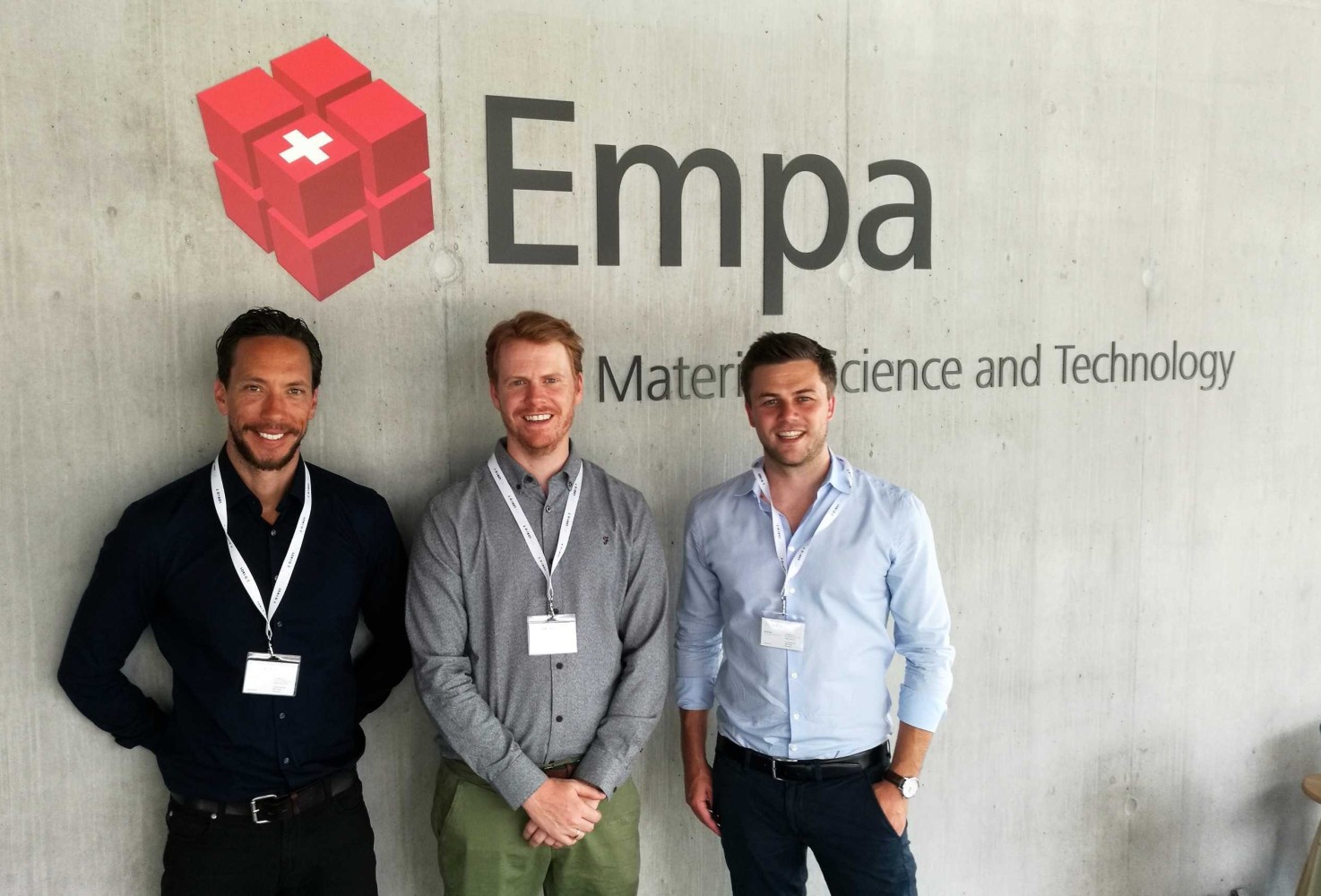
Our CEO, Julian Studer, together with Alan Rae, Chief Sales Officer, and our CSO, Yannik, seven years ago at an event in Zurich
4. How do you measure success in strategic decisions, and when do you know a strategy is working?
Let's be clear: the ultimate measure of any scale-up is revenue and market penetration. We are a business, and if our strategic decisions do not eventually show up on the bottom line, they have failed.
However, revenue is a lagging indicator. It tells you if you made the right decisions six months ago. To know if a strategy is working today, I look at the leading indicators, which are almost entirely human.
"You cannot just demand growth; you need a team with the passion to deliver it. I know a strategy is working when I stop having to 'push' and start seeing the team 'pull.'"
For me, the most critical metric is the mindset of the organization. Are the teams aligned? Is there a genuine hunger to innovate? When I interact with the teams or join a strategy session, is there energy?
When I see people taking ownership, solving problems before they reach my desk, and showing genuine passion for what they are building, I know we are on the right track.
If the internal engine, specifically the culture and motivation, is firing on all cylinders, the hard metrics like revenue always follow.
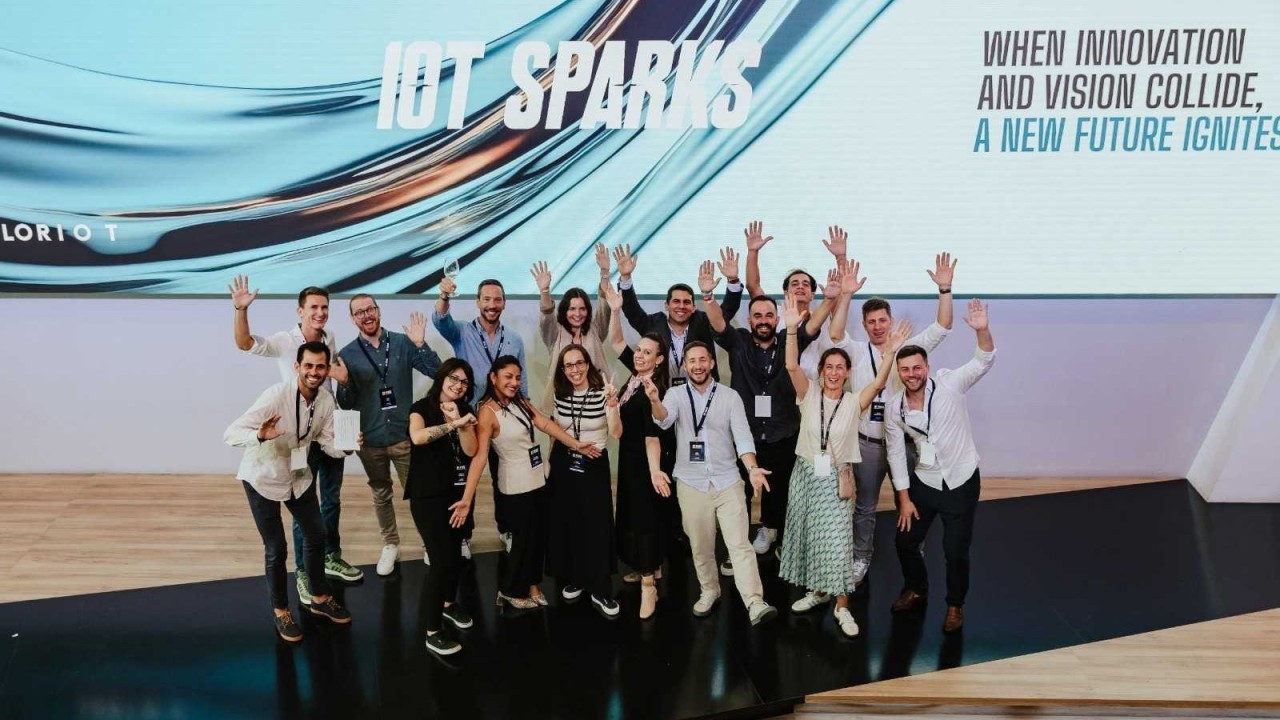
First edition of IoT Sparks in 2024
5. How do you balance responding to immediate market demands with positioning for long-term industry shifts?
My approach is not just a mental balancing act. It is structural. I learned that you cannot ask the same team to optimize a mature product and invent a new one at the same time. They require different mindsets and different metrics.
We handle this by dividing our focus into two distinct engines.
First, we have our Core Engine. This is our established business where we serve our professional clients. Here, the focus is on stability, security, and incremental improvement. We listen to immediate market demands, and we execute with precision.
Second, we have our Innovation Engine. This includes initiatives like LORIOT Verso and IoT Sparks ✨. These teams are tasked with looking at the horizon. They are allowed to experiment and take risks that the core business cannot.
However, I want to be clear that it does not matter which engine you are operating. Everybody is asked to innovate, just with a different focus.
My job as CSO is to protect both. I protect the core team from being distracted by every new trend, and I ensure the innovation teams have the necessary freedom to experiment.
6. Looking back at a decade in this company, what decision or moment do you consider most pivotal? And where do you see LORIOT heading in the next few years?
It might sound counterintuitive, but the most pivotal moment was actually my decision to leave LORIOT to fulfill a lifelong professional dream of working for Microsoft. To be clear, I did not leave with a plan to return in two years. I left to learn from the best and was fully committed to that path.
However, the dynamic changed when the opportunity arose to return and lead LORIOT, this time with a strong strategic partner, WIKA Group, backing us. That was the turning point. I looked at the new setup and saw the massive potential. We always had the technology, but with WIKA in the back, we had the strategic stability to truly scale.
Deciding to come back was the pivotal moment. I was able to bring the discipline and leadership lessons from Microsoft back to a company that now had the firepower to execute on them.
As for where we are heading, we are graduating. In the next few years, I see LORIOT transitioning from a successful scale-up into a global institution.
"We will be the backbone for professional IoT deployments worldwide. We are moving beyond just providing connectivity to becoming the trusted partner that ensures business value for the most critical sectors on the planet."
7. What has been your best moment at LORIOT so far?
To be honest, it is impossible to pick a single moment because the highlights keep changing as we grow.
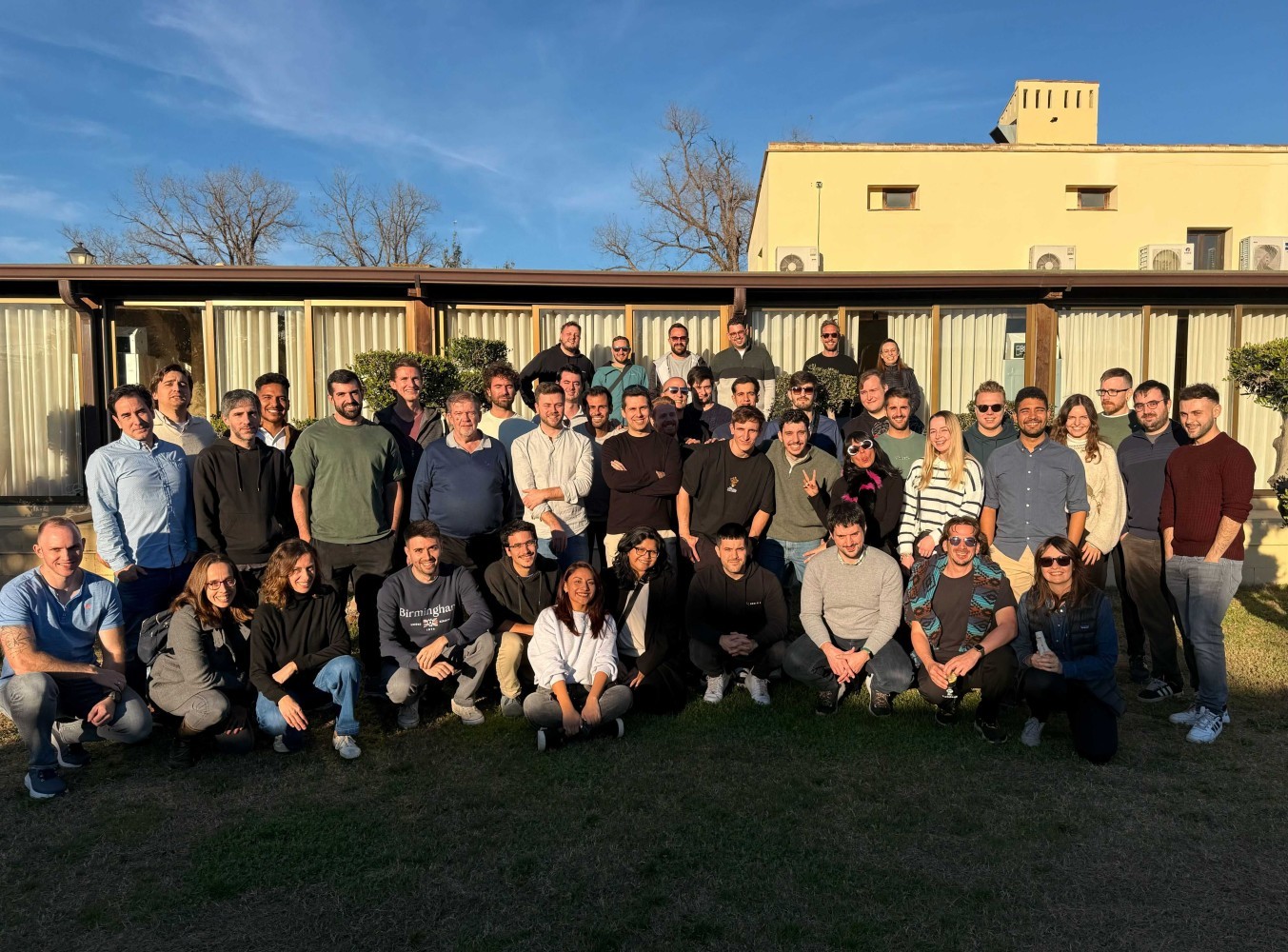
Of course, the yearly team events are special because we connect as people, not just work colleagues. Then there is the satisfaction of standing alongside the Verso team at a customer site, solving a complex challenge, and watching our technology actually come to life.
But what I am most proud of is the culture we have built. I love watching our people grow, step up, and master challenges that used to scare them.
And I love that despite our size, we haven't lost our spark. We still celebrate every deal like it is the first one. That shared energy, whether it is solving a problem or celebrating a win, is what makes LORIOT special.