"We are not data collectors anymore. We must be specialized insight facilitators."
IoT promises a smarter world. But between that promise and a working solution, there's a layer of complexity that most people never see: fragmented hardware, disconnected systems, and data that means nothing without the right strategy and context to interpret it.
Robin Wulfes, IoT Solutions Lead at LORIOT Verso, is the person who bridges that gap: from the first question he asks a client to the dashboard they open every morning, he owns the entire journey from physical reality to digital decision-making.
In this edition of LORIOT Voices, he walks us through how he diagnoses a client's problem, the importance of selling outcomes rather than technology, and what it actually takes to turn raw data into actionable insights.
1. You lead IoT Solutions at LORIOT Verso. How would you describe what you do to someone outside the industry?
Imagine a big office building, a river and drainage system, or an entire city. All these places "feel" things: whether a room is too cold, whether farmland has flooded, or how many tourists are entering an attraction. But most of the time, they have no way of telling anyone. My team and I build the interface between that physical reality and digital decision-making.
First, we find the hardware that detects changes in the environment and use LORIOT's LoRaWAN network technology to transmit those tiny signals over long distances on very little battery. Then, and this is a very important step that can never be missed, we develop the algorithms and dashboards that turn those signals into something anyone can actually act on.
The result: A facility manager opens an app and sees "the fridge in Pharmacy Room 3 is failing". They don't need to understand what happened behind the scenes. They just fix it before the medicine spoils.
"Over time, we saw that our clients didn't want to manage separate pieces of the puzzle. They wanted someone to integrate it all."
2. LORIOT Verso is a relatively young division. What's its proposal, and what is the value for the customer?
Most companies can provide one piece of the puzzle: just the sensor, or just the network. But LORIOT has spent years providing the backbone of LoRaWAN projects, and we kept seeing the same pattern: clients overwhelmed by a fragmented ecosystem.
"LORIOT Verso puts the entire puzzle together so the customer doesn't have to be a tech expert to use and maintain it."
So when a customer works with us, what they really get is not just a working IoT solution, but:
High speed and lower cost of ownership:
Building an IoT solution from scratch is expensive and slow. At Verso we use certified hardware and field-tested infrastructure, which cuts time-to-market from months to weeks and significantly reduces both investment and risk.
"Data Noise" that turns into actionable insights:
The biggest risk in IoT is what I call "data puke": a flood of raw numbers that leaves a customer more confused than before. We focus on the "so what." Instead of reporting a sensor value, we translate it into something useful: an automated flood alert, a maintenance flag, a compliance report.
Co-Innovation through our partner network:
Verso's strength isn't only what we have in our catalog. It's our global network of specialized hardware partners. When a customer faces a unique challenge, we act as the bridge between their need and the right engineering expertise, building bespoke solutions at a speed that would be impossible working alone.
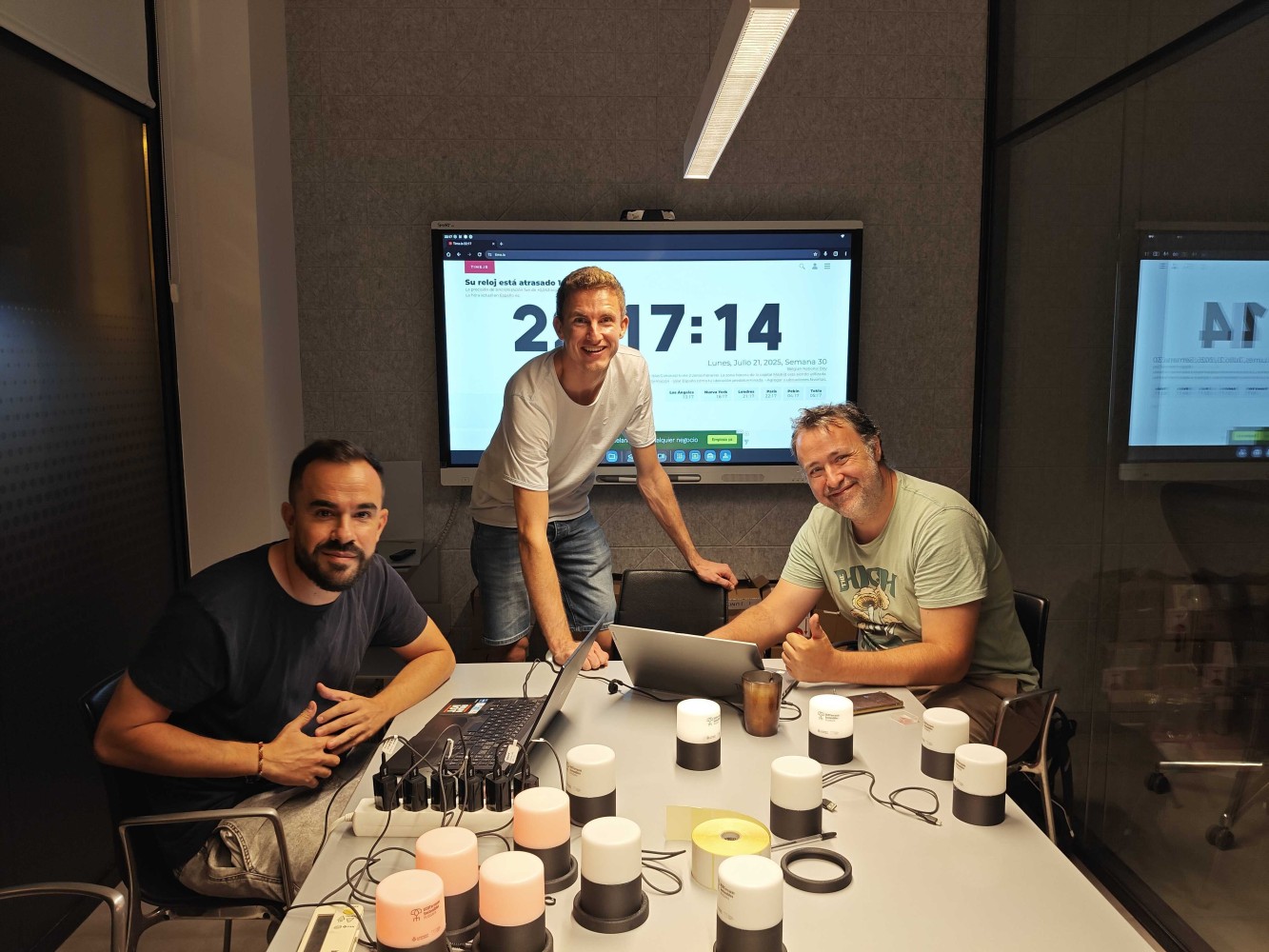
A good example is a project we did in Valencia, where we partnered with Plenom - Busylight to design and manufacture a custom LoRaWAN-enabled lamp alongside partners like Kerlink, Decentlab GmbH, or Miromico.
LORIOT Verso and Plenom working together for our use case in Valencia. Click to read more.
3. When a new client comes to you with a challenge, what's your process for diagnosing and developing a solution?
As the IoT Solutions Lead, before I talk about gateways or battery life, I ask one question: "What is the cost of you not knowing this information right now?"
"We're not connecting devices. We're solving a business or a city problem."
From there, I look at three things: First, the why. I need to understand why those data points matter before deciding what to measure or how to present and analyse them. Second, the environment. Physical conditions change the math. We do site visits and connectivity tests before we commit to any architecture. Third, the data itself. Every 10 seconds is a very different problem than once an hour for 10 years on a single battery.
Once we have a real picture of the client's situation, we design the solution. LORIOT is hardware agnostic, which means we choose the best device for the job rather than forcing a fit.
As soon as the architecture and installation plan are set, we start with the most exciting part: The data orchestration. I have mentioned it before: Raw data is just noise.
"A sensor reading means nothing on its own. What matters is that the right person sees the right information at the right moment, and knows exactly what to do with it."
4. What kind of projects fascinate you the most?
What energizes me most is building something that hasn't existed before. Whether it's sensors designed from scratch to reduce the hardware footprint for a client from Switzerland, or combining BLE and LoRaWAN to track livestock in areas with zero cellular coverage.
"The common thread is the same in all of them: Giving a voice to infrastructure that has never had one is incredibly rewarding."
5. If you could redesign one part of how IoT solutions are typically scoped or sold, what would it be?
I would move the entire industry away from selling devices and toward selling outcomes.
"The moment you stop talking about how many sensors a project needs and start talking about the value it delivers, the whole relationship changes."
When you sell hardware, you're a vendor. When you sell a result, a waste reduction, an increase in safety, a boost in efficiency, you're a partner. That's what I want LORIOT Verso to be.
6. What do you hope IoT will ultimately contribute to the way we live and manage our environment?
I hope IoT eventually becomes invisible while making our lives, our work, and our environment genuinely better.
The goal was never more screens to look at; it's a world that manages itself more efficiently in the background. What I'm also seeing is that the industry is maturing. Basic data visualization used to be enough to impress a client. It no longer is. The real value now comes from turning raw data into insights that aren't obvious.
We, as people working in the IoT industry, are not data collectors anymore; we must be specialized insight facilitators.