"You can have all the contracts, structures, and processes in place, but if you don’t click with the people, it never really works."
Through our previous #LORIOTVoices articles, we’ve explored topics like products and gateways. This time, we’re shining a spotlight on one of the most important assets any company can have: people, relationships, and partners.
Over the past decade, we’ve learned that the true key to success goes beyond sensors you deploy, but who you meet along the way. We’re proud to have partnered with so many exciting companies striving to enhance IoT for a more connected world.
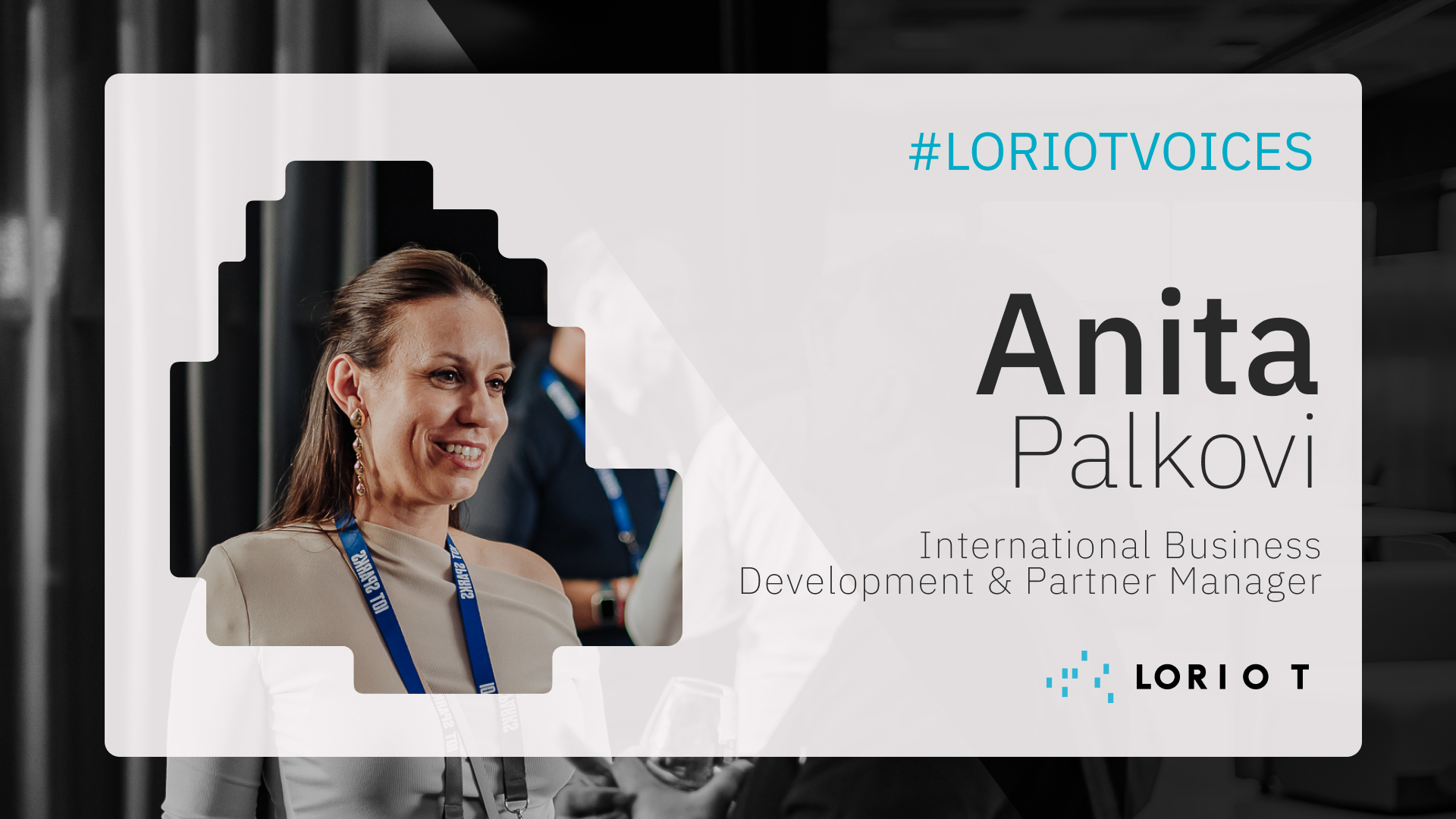
In our 3rd #LORIOTVoices article, read the insights of Anita Palkovi, our International Business Development & Partner Manager. She has a natural talent for building relationships and finding answers to every question.
1. What are the key aspects of your role at LORIOT, and how do they contribute to driving the company’s vision forward?
At LORIOT I work across several areas; business development, sales, and account management. I manage relationships with clients and partners around the world, from Europe to the Middle East and Asia.
I also lead our global Partner Program, developing long-term collaborations that expand our ecosystem. My role often sits between business and technology, translating complex technical solutions into real value and supporting C-level and technical decision-makers through a consultative approach.
2. What aspect of building international business relationships in the IoT space inspires you most?
I think what inspires me most is that, even in such a technical field, everything still comes down to people. Behind every smart system, there’s a group of humans who choose to listen to each other.
Working internationally teaches you humility. You learn that there isn’t just one right way of doing things. Cultures, habits, and expectations differ, and that’s the beauty of it. It forces you to listen first and to find the common rhythm. If you don’t, you won’t be successful.
3. What's unique about selling IoT network management solutions compared to other technology products?
What’s unique about selling IoT network management solutions is that you can’t really do it on your own. To make an IoT solution work, many different players have to come together: sensor manufacturers, gateway providers, integrators, and platform providers.
At LORIOT, we take care of one specific part of that puzzle, the network management layer. That’s why collaboration is everything for us; we depend on our partners, both technically and personally. Without them, nothing we build would make sense.
4. What makes an IoT partnership truly valuable beyond just the initial agreement?
For me, a truly valuable partnership is a bit like a friendship. You can have all the contracts, structures, and processes in place, but if you don’t click with the people, it never really works.
The best collaborations grow over time. You work together for years, you meet in person, and you build trust through real conversations. That personal connection always makes things easier. In international business it can be harder sometimes, simply because we don’t get to meet that often.
5. Have you noticed any patterns in how successful companies scale their IoT operations across different regions?
"The most successful companies I’ve seen are the ones that adapt. They listen, they respect local differences, and they build trust with the right partners instead of trying to control everything."
And in the end, it’s simple: when people feel respected, they stay. In teams, in projects, in business.
6. Looking back on your time at LORIOT, are there moments that stand out as especially meaningful in the company’s growth story?
For me, the most meaningful moments are always the ones when we meet people in person. Events, customer visits, meeting partners, or finally seeing our colleagues from other countries. Those are the moments that stay with me.
Building strong relationships, fostering trust, and collaborating across borders are at the heart of successful IoT projects. Anita’s insights remind us that behind every connected system, it’s people who make it work.
What strategies have you found most effective for building lasting IoT partnerships, whether locally or internationally? Share your experiences, lessons, or questions in the comments—we’d love to learn from your perspective.