Jump to content
smart parking cover

Smart Parking for People with Disabilities

Driving urban inclusivity by ensuring reliable, real-time access to essential parking for citizens with disabilities.

In recent years, global demographic trends have shown a significant increase in the number of people living with disabilities. According to the WHO, an estimated 1.3 billion people - approximately 16% of the global population - currently experience a significant disability.

This figure is rising alongside an aging global population. The median age has risen steadily over the last decade and by 2100, the number of people over the age of 80 is forecasted to triple.

Given the increasing demographic shifts and the constraints of modern urban infrastructure, smart solutions that prioritize accessibility are more necessary than ever. Explore how the LORIOT Verso division deployed a specialized Smart Parking solution to transform urban mobility in Huesca:

Challenge

Municipalities navigate complex obstacles as they work to improve accessibility and drive sustainable urban growth.

Key challenges included:

  • Increasing demand vs. limited supply: Parking spaces for people with disabilities are very limited. As the population changes, the demand for these spots is increasing, yet the supply remains stagnant. This imbalance makes accessing essential urban spaces, like hospitals, supermarkets, and service providers, extremely challenging for those who need them most.
  • Static urban layout: Cities like Huesca, Spain, have a static, historical urban layout that prevents the physical expansion of parking zones. As physical space is strictly limited, the decisions on where to allocate additional parking spots must be highly strategic and data-driven. Which introduces yet another challenge.
  • Information and data gaps: Without real-time usage data, decision-makers are "flying blind," unable to base infrastructure planning on actual demand.
  • Environmental and technical conditions: From a technical perspective, the market requires an IoT infrastructure that is exceptionally resilient. In urban environments, the solution has to withstand all kinds of weather conditions and function without signal interference caused by the dense buildings and other radiotechnology-based systems.

Solution

With a commitment to inclusivity and a drive to solve the mentioned challenges, the City Council of Huesca, Spain, deployed an IoT Smart Parking solution. The system provides real-time occupancy monitoring for dedicated parking spots distributed across the city.
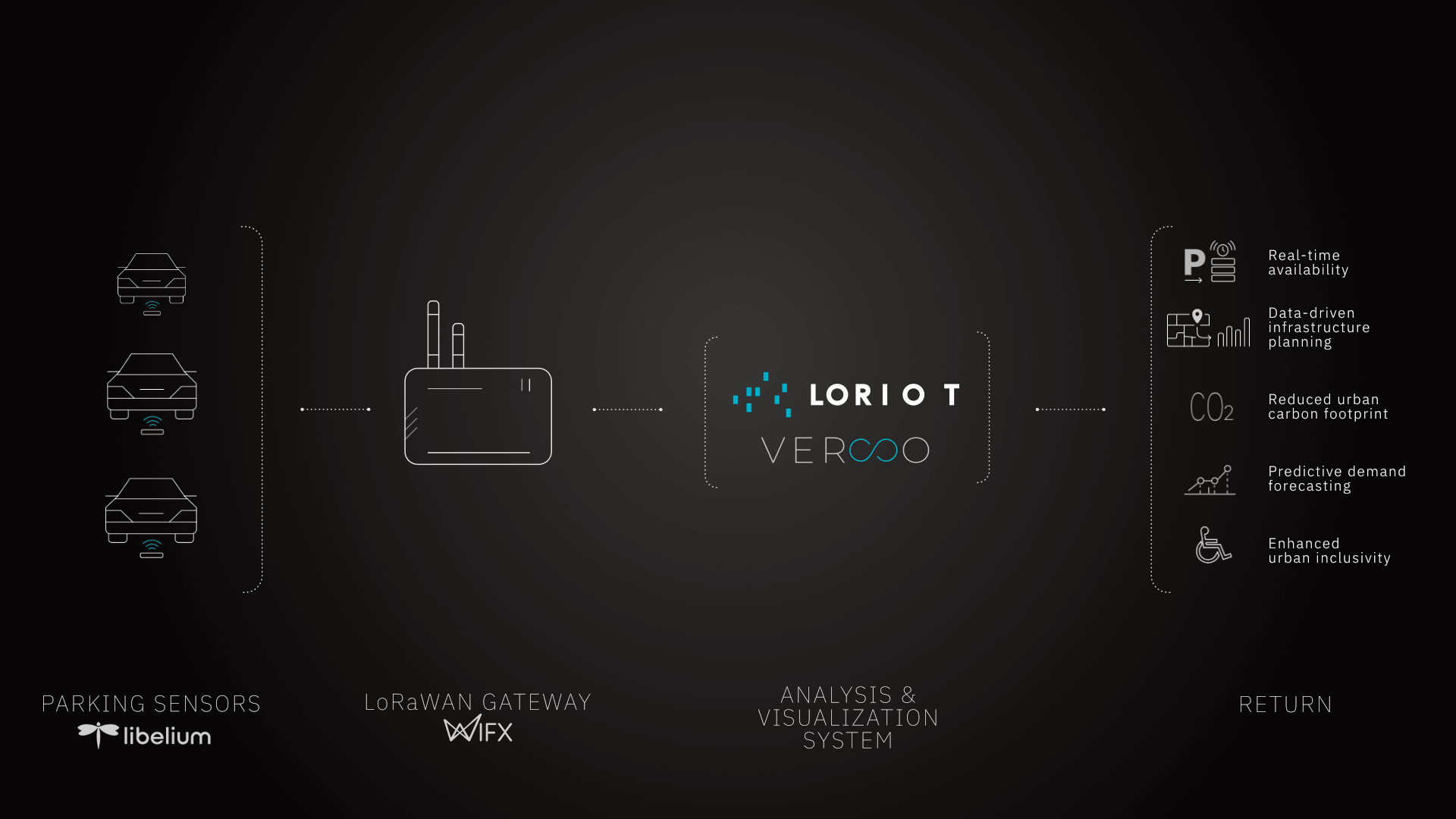
Huesca Use Case Architecture

In collaboration with local partner Barreu, the project utilized Libelium LoRaWAN surface-mounted radar sensors. They utilize FMCW radar technology for presence detection, ensuring immunity to magnetic interference common in urban environments. Four gateways are providing coverage to the whole city, transmitting the data to the LORIOT Network Management System (NMS) and enabling the visualization through the IoT platform.

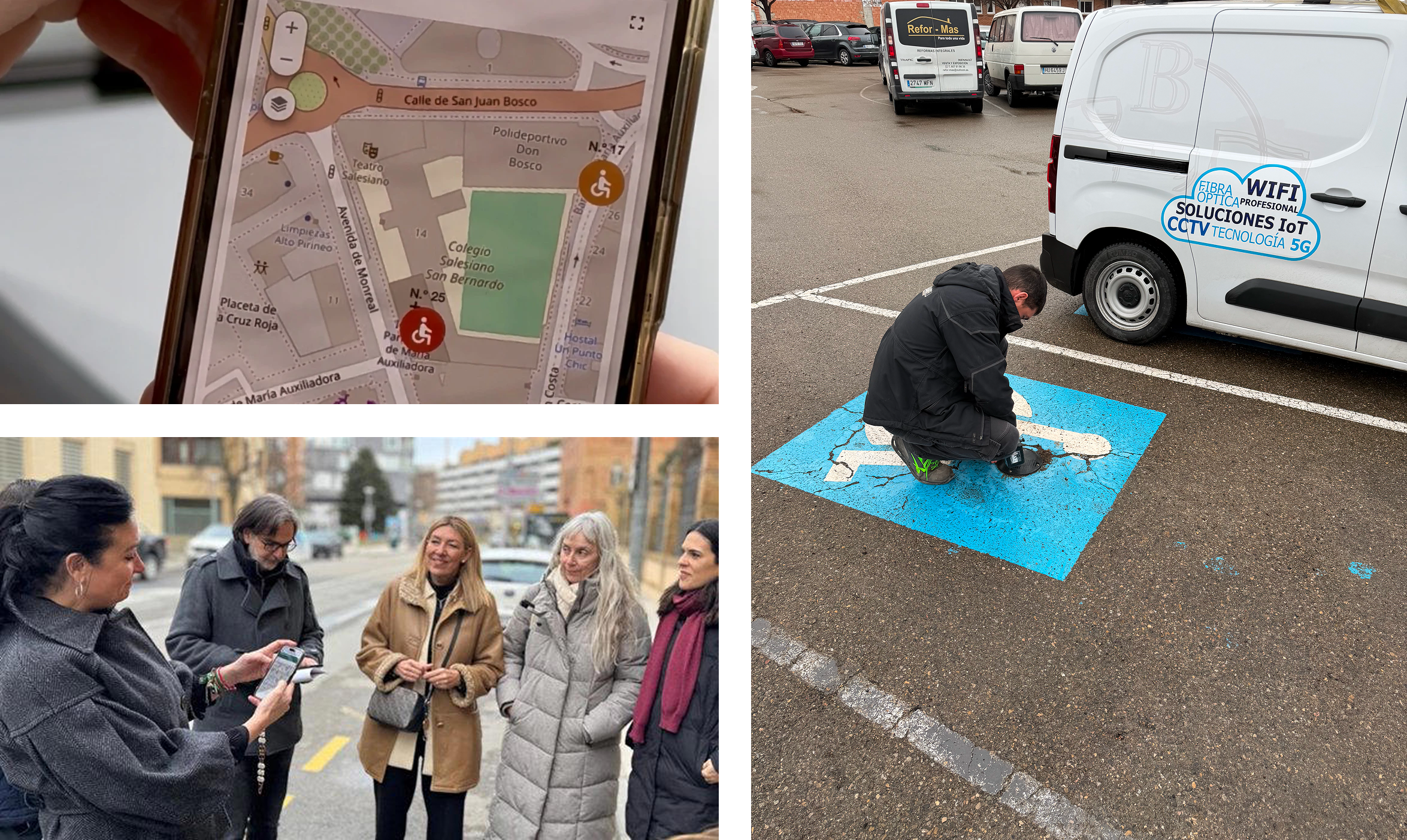
Huesca Smart Parking Use Case Collage

The platform provides a dual-interface solution to meet the needs of both citizens and administrators:

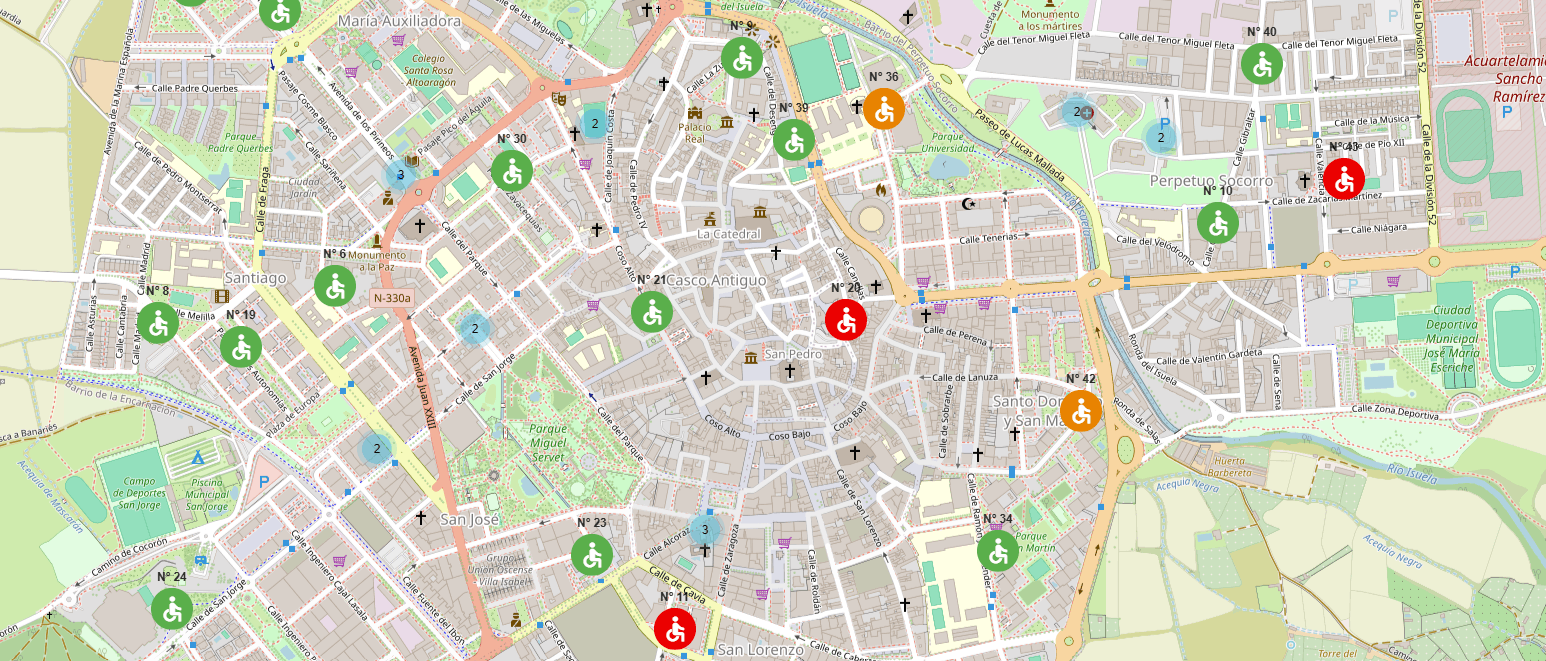
  • Public Interface: A map-based web, accessible through computer or phone (responsive web), allows citizens to view the real-time status of all monitored parking spaces. Using traffic light based color-coding, users can instantly identify available spots and click on individual locations for detailed information. Access the map here.

    Public Smart Parking Dashboard
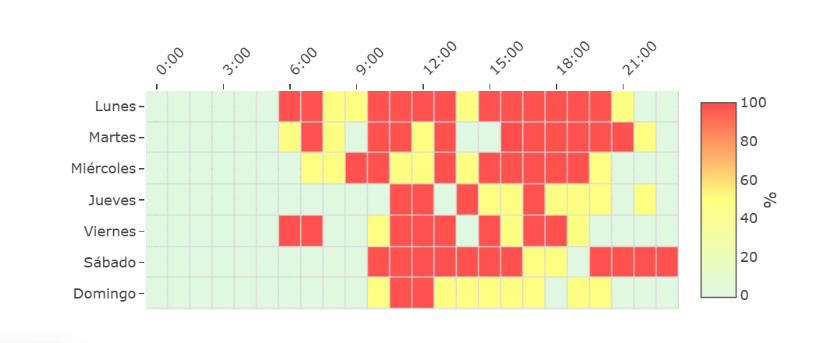
  • Management Console: The Huesca City Council utilizes a personalized dashboard for deep-dive analytics. The platform visualizes historical occupancy data, identifying peak usage periods and high-demand zones. Using these insights, integrated intelligent algorithms can generate predictive forecasts for future demand. This allows the government to move from guesswork to data-driven decision-making when planning the expansion or relocation of accessible parking infrastructure.

    Internal Smart Parking Dashboard

"LORIOT has shown great professionalism, and the implementation of the service was achieved on schedule and with a high quality. We are frankly happy with the result."
Oscar Tesa Jarne - Head of the Technological Innovation Service, City Council of Huesca

The Return

Prior to this deployment, the project involved multiple vendors and stakeholders, which created excessive complexity and prevented the system from reaching its full potential. To overcome these coordination hurdles, the City Council of Huesca decided to streamline the project by partnering with LORIOT Verso as a single, end-to-end provider.

This transition allowed the city to move past previous delays and successfully launch a reliable infrastructure that delivers significant benefits to the community:


  • Guaranteed Accessibility: Real-time visibility allows citizens with disabilities to verify the availability of dedicated spots before they arrive, ensuring a reliable and stress-free experience.
  • Time-saving and Sustainability: The real-time availability map significantly reduces "search traffic," which decreases the urban carbon footprint and increases public satisfaction with municipal services.
  • Operational Optimization: With access to detailed occupancy trends, administrators can make data-driven decisions regarding the expansion, reduction, or reallocation of parking assets based on actual community demand rather than estimates.
  • Predictive Intelligence: Intelligent algorithms can synthesize variables such as peak hours and turnover duration to forecast future demand.
  • Reliable Source of Information: The public map serves as a communication hub, sharing information about surrounding events or roadworks that may affect parking. The government can also use the platform to push notifications regarding planned maintenance or temporary closures.
  • System Interoperability: All data and insights generated by the platform can be seamlessly integrated into existing third-party systems or municipal applications. This flexibility ensures that the city’s smart infrastructure remains connected and adaptable to future technological needs.
The project supports multiple United Nations'sustainable development goals (SDGs):

Sustaibale Development Goals logo
No Poverty
Zero Hunger
Good Heath and Well-being
Quality Education
Gender Equality
Clean Water and Sanitation
Affordable and Clean Energy
Decent Work and Economic Growth
Industry, Innovation and Infrastructure
Reduced Inequality
Sustainable Cities and Communities
Responsible Consumption and Production
Climate Action
Life Below Water
Life on Land
Peace, Justice and Strong Institutions
Partnerships for the Goals

“There are few things more rewarding than simultaneously improving the lives of citizens and simplifying the work of the public sector. With this project in Huesca, we achieved both: delivering a turnkey solution that empowers the City Council while making the city truly accessible for people with disabilities.”
Robin Wulfes - Vertical IoT Solutions Lead, LORIOT Verso

Conclusion

The Huesca Smart Parking project serves as a powerful blueprint for the cities of tomorrow. By successfully bridging the gap between limited urban infrastructure and an aging population’s increasing needs, Huesca has proven that technology is the key to true urban inclusivity.

Through the synergy of Libelium’s resilient hardware and LORIOT’s robust IoT connectivity, the city has transitioned from reactive management to a proactive, data-driven service.

This project does more than just monitor parking. It restores autonomy to citizens with reduced mobility, ensuring that as our world changes, our cities remain open and accessible to everyone.

Share this use case:
Twitter
facebook
LinkedIn

About Huesca City Council

The Ayuntamiento de Huesca (Huesca City Council) is the governing body of the capital of the Huesca province in the Aragon region of Spain. Known for its forward-thinking approach to municipal management, the Council has prioritized digital transformation and urban innovation to serve its citizens better. By embracing "Smart City" initiatives, the Ayuntamiento focuses on integrating modern technology into its historical urban landscape, aiming to improve sustainability, mobility, and social inclusivity. You can read more about the City Council of Huesca in https://www.huesca.es.